Custom Ceramic Plates Buying Guide for Restaurants & Wholesale Buyers
Custom Ceramic Plates Buying Guide for Restaurants & Wholesale Buyers
Plates are the hardest-working item in any food service operation. A restaurant plate is washed, stacked, and carried dozens of times a day, knocked against other dishes, run through commercial dishwashers, and dropped by staff and guests alike. Yet buyers often choose plates with less care than they give to a mug, and the result is a tabletop that chips, glazes that craze, and a reorder cycle that never ends. This guide covers everything a restaurant, hotel, caterer, or wholesale importer needs to specify before ordering custom ceramic plates: the plate types that fit each role, the sizes that matter, the body materials and glazes that survive professional use, and the customization and sourcing decisions that protect both your tabletop and your budget.
Start With the Plate's Job, Not Its Look
A plate is a tool with a specific job, and the job determines every specification. A main course plate must hold a composed dish without crowding and retain heat reasonably well. A salad plate must be light and stack tightly for high turnover. A dessert plate carries small portions and spends most of its life being handled, so durability at a compact size matters more than thermal retention. A bread plate is a support piece that must match the rest of the set and survive constant cycling through the dishwasher. A sushi plate must be visually clean, dimensionally consistent, and easy to portion.
Before any aesthetic decision, write down what each plate type in your order will do: how many covers per service, how many times it will be washed daily, whether it will hold hot or cold food, and whether it will be seen by customers or only used in the kitchen. Plates that look identical on a supplier's page can behave very differently in service, and the specification that separates them is the job they are asked to do.
Know the Plate Types and Their Sizes
The standard plate vocabulary is shared across the industry, and using it correctly in your RFQ prevents expensive mismatches. The main course plate, also called a dinner plate, typically ranges from 25 cm to 32 cm in diameter, with 27 cm to 30 cm the most common for restaurant service. The salad plate ranges from 18 cm to 23 cm, the dessert plate from 16 cm to 20 cm, and the bread plate from 13 cm to 16 cm. Sushi plates and serving platters are usually specified by their own dimensions and are frequently custom-shaped.
Size is not just a visual choice; it affects portioning, table coverage, and storage. A dinner plate that is too large makes a modest portion look sparse and takes more space on the table and in the dishwasher rack. A plate that is too small forces the kitchen to crowd the plate, which hurts presentation and slows service. When you specify sizes, give the diameter in centimeters, the rim depth if it matters for your dishes, and the tolerance you will accept, typically plus or minus a few millimeters from the factory.
Choose the Body Material That Matches Your Operation
The ceramic body underneath the glaze determines the plate's weight, strength, thermal behavior, and price, and it is the decision where buyers most often save money at the wrong moment.
Porcelain plates are the most common professional choice. They are dense, smooth, and strong, hold heat moderately well, and offer a clean white surface that presents food beautifully. Standard porcelain is an excellent all-rounder for restaurants and hotels. Bone china adds whiteness and translucency with a lighter weight, which gives a premium feel, but it is more expensive and more fragile than standard porcelain, so it belongs in fine-dining settings where handling is careful. Stoneware plates are heavier and more rustic, with a natural, artisanal look that suits casual and specialty concepts, and they are generally very durable. Reinforced porcelain, sometimes called hotel porcelain, is engineered for maximum impact and thermal resistance and is the standard choice for high-turnover operations, cafeterias, and institutional service.
Match the body to the operation, not to the catalog photo. A fine-dining concept can justify bone china. A busy casual restaurant should build its program on reinforced porcelain or high-quality standard porcelain. A cafe with an artisanal brand identity may choose stoneware despite the weight. The factory can tell you the exact body composition and the durability test results, and it is worth asking for that data before you commit to a material you have only seen in an image.
Glaze and Edge Durability: Where Plates Actually Fail
Plates fail in service in predictable places: the rim, where stacking and washing cause chips; the surface, where metal cutlery scratches the glaze; and the base, where the unglazed footring absorbs moisture and can craze under thermal stress. The glaze specification directly controls all three failure modes.
A fully glazed rim is essential for commercial plates. Some economical plates leave the rim unglazed or thinly glazed, which looks fine on arrival and chips within weeks. Specify a glaze that covers the rim completely, and ask the supplier how the rim performs in a standard edge-impact test. Surface durability is controlled by glaze hardness: a dense, well-fired glaze resists the fine scratches that make plates look worn after a few months. The footring, the unglazed circle on the underside, should be smooth and properly fired so it does not absorb water and craze during thermal cycling in the dishwasher.
Thermal shock resistance is the second critical glaze-related property. A plate that can move from a hot holding cabinet to a cold counter, or from the dishwasher to the pass, without cracking or crazing is a plate that will survive a commercial kitchen. Ask the factory for the thermal shock test result for the specific body and glaze you are ordering, and treat a vague answer as a warning rather than a confirmation.
Customization: Logos, Colors, and Shapes That Match Your Brand
Custom plates are one of the strongest brand carriers in a restaurant, because every customer sees them at every meal. The decoration options follow the same logic as mugs, but with a few plate-specific details. Silk-screen printing suits simple logos and monograms on the rim or center of the plate and delivers the best cost at volume. Ceramic decals handle full-color artwork, gradients, and fine detail, and they are the standard for branded restaurant plates with complex logos. Hand-painted and decorated-over-glaze techniques belong to the premium end of the range.
The printable area of a plate is the flat inner surface, and the usable zone depends on the plate's shape and the position of the food. A logo placed where the main course sits will be covered at every service, so plan the decoration placement around the actual plating style. For stackable orders, confirm that the decoration sits flush with the glaze so plates do not stick together when stacked, which is a surprisingly common failure with thick decals on rim-decorated plates.
Color consistency deserves the same discipline as on mugs. Send your Pantone or RGB references, approve a physical color sample, and keep that sample as the reference for the production batch. Plates are reordered repeatedly over the life of a restaurant, and a color that drifts between orders makes the tabletop look mismatched for years.
Sourcing, MOQ, and Packaging for Plates
Plates are heavier than mugs, which makes freight a real component of the landed cost, and the sourcing plan should reflect it. A container holds fewer plates than mugs by weight and volume, so packaging density and stacking design directly affect your freight bill. Ask the supplier for the container loading quantity for your specific plate sizes, and compare packaging options, because a plate packed with adequate separators and edge protection ships more safely even if it uses slightly more carton space.
The MOQ for custom plates is typically higher than for mugs, because plate molds and screen setups are larger and more expensive. Standard MOQs commonly start around 3,000 to 5,000 pieces per design, and the practical way to manage this is to consolidate your plate types into one program: order the dinner, salad, dessert, and bread plates together under one body and glaze specification, with shared screens where the decoration allows, so setup costs amortize across the whole set rather than being charged per plate type.
Lead time follows the same structure as other ceramic products: one to three weeks for design, two to four weeks for sampling, fifteen to twenty-five days for production, and shipping by sea, air, or express. For a restaurant opening or a seasonal menu change, back-calculate from the target delivery date exactly as you would for a holiday program, and build in a buffer for the sample round, because a plate design that is wrong on the sample is far cheaper than a full container that is wrong.
Working With the Factory: Samples and Quality Checks
Never authorize mass production of plates without an approved physical sample, and check the sample against the specific things that matter for plates. Measure the diameter and weight against the spec. Run your fingernail around the rim and inspect for chips or glaze thinness. Look at the base footring for smoothness. If possible, run a sample through a dishwasher cycle and a thermal shock test, because the laboratory results in a certificate are less convincing than the behavior of the actual product. Check the decoration for color match, sharpness, and placement against the approved artwork.
For the production batch, use an inspection that covers the same points at scale: rim chips, glaze defects, dimensional consistency, color variation, and packaging integrity. A third-party inspection company or your own agent can perform the checks before the goods are packed and locked into the container. Plates are one of the product categories where small defects multiply fast in service, because a chipped rim makes a plate unsellable in a restaurant, and a full carton of slightly chipped plates is a total loss.
Conclusion: Build the Tabletop That Works
The right plates for your operation are the ones that match the job, the body, the glaze, and the brand. Define what each plate type must do, choose a body that matches the intensity of your service, specify a glaze that survives the dishwasher and the thermal shocks of a commercial kitchen, plan the decoration around the actual plating style, and manage the MOQ and packaging as part of a consolidated program. Plates chosen this way do not just look good on the table; they survive the service, wash clean, stack tight, and reorder consistently for years.
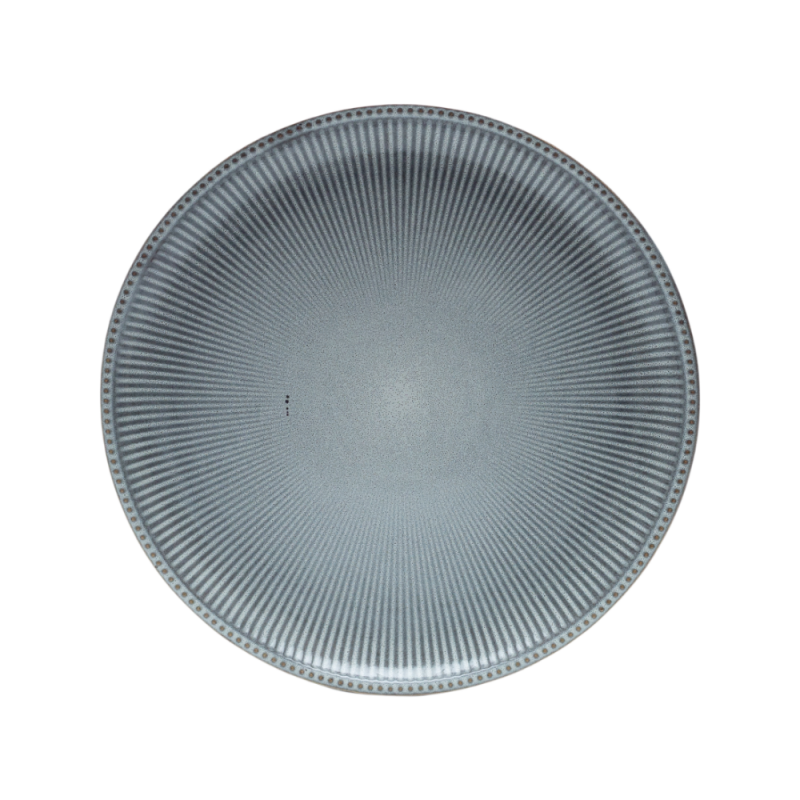
Looking for a partner that builds plates that last? Storiware customizes ceramic plates, bowls, and tableware for restaurants, hotels, and wholesale buyers, with body and glaze options engineered for commercial service, physical sampling, and documented quality standards. Browse our plate collection below, and our team will help you specify the right program for your operation.
Featured Ceramic Tableware from Storiware
Explore products featured in this guide:

Need a custom quote? Send an inquiry or browse our full product catalog.